|




















Best viewed using:
Internet Explorer
or
Mozilla Firefox

 |

This is our "idea" page. Whenever we find a jig or fixture that
saves steps or improves precision, a procedure that simplifies a
process, or a just plain helpful idea, we'll post it here. Hopefully, some of
them will be ngenious n-uf to nspire you. All drawings, photos and
documentation on this page may be freely reproduced for non-commercial
purposes only.We encourage you to contribute
clever and well documented ideas. We'll try to post as many as possible. If submitting photos please make
sure they're in JPEG or GIF format and each is 25KB or less in size (for
readers with slow Internet connections). Send to:
[email protected] With your
permission, we will include your name as author. Lengthy procedures and MS
Word documents will be converted to Adobe® PDF format for
easier download by our readers.
Rod Drilling Jig
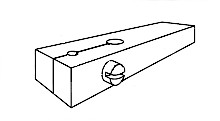
Ever need to drill straight holes in small diameter styrene rod
without the rod bending or wobbling. This simple little holder will support
your part. If you need to make a piece of special plastic tubing this will
clamp and hold firm letting you drill for very thin tubing wall thickness.
We've also used it as a guiding tool for sawing a slot along a length of rod.
Jeweler's Bib
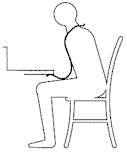
Save time and a lot of frustration with this simple aid. As
hobbyists, we spend considerable time at the workbench using small tools and
working on very small and delicate parts. It can be very aggravating to have to
stop and crawl around on the floor looking for a dropped part. An old friend who
did watch repair put us on to this and its been a great help. You can make one
in just a few minutes, and probably have the material on hand.
Light Box
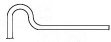
Our N2018 .018" diameter stainless tubing is ideal for fabricating different
styled lighting fixtures in several different scales. We offer two versions
(N scale and HO) of gooseneck style building light kits using this tube and
its small size helps these lights to look very prototypical. That's the good
news... The not-so-good news is that once this tubing is formed into the
gooseneck shaped, threading two of our tiny #38 wires through the tube can
range from very challenging, to extremely frustrating, to "%@#!*&!
(depending on the scale you're working with).
One of our customers
responded with a technique that he found made the job much easier. After
trying it, (and tweaking the process just a little) we definitely agree.
We've created a PDF file of the procedure that can easily be downloaded
and/or printed by just clicking on the PDF icon to the right.
This actually has nothing to do with Casablanca… it’s about modeling and
magnification. Or… what you see is what you get!
Just click on Bogie's picture for more information
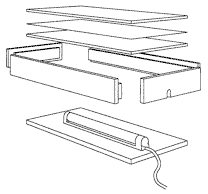
If you plan to do precision work with small photo-etched parts
and have difficulty accurately cutting them from the fret, build this light
box and make the process much easier and more precise. It also helps to
improve accuracy when trimming decals. With the light off, the plate glass top
is also excellent for those assembly projects that need a very flat, cleanable
work surface. It's easy to build.
Gallery... what???
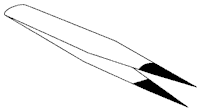
Paint my Tweezers ??
Here's a clever way to cut down on nicks and scratches the next
time you're handling pre-painted photo-etched material. Just dip your tweezer
tips in the paint color of the pre-painted parts and let them dry thoroughly.
When you use them to handle or bend the parts, the paint will help hold and
cushion the part. It won't totally eliminate the possibility of nicks and
scratches, but it will help. When you're done, just soak the tips in
solvent or gently scrape the paint off.
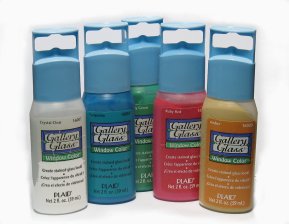
Gallery Glass ®. This product is manufactured by Plaid
Enterprises, Inc. located in Norcross, GA and can be purchased at any
Michaels Craft Store, Craft Warehouse or most craft supply stores.
We have found this product to be extremely useful in many modeling
applications due to its unique qualities. As squeezed from the bottle, it has
the consistency of white glue, It comes in many different colors and dries to
a rubbery consistency, and... totally clear in that color. As
a result, you can make lenses, encapsulate wired LED, create taillights, turn
signal lenses, street reflectors... the possibilities are endless. And...
being acrylic, it doesn't attack anything. Being a bit rubbery when dry, if
the application doesn't appear quite right, just peal it off and do it again.
This is truly amazing stuff. It's available in 2-ounce plastic squeeze bottles
(enough to last for many years) at about $2.49-$2.99 per bottle. For examples
of use, click on Photos in the More Info
table above.
© 2022 Ngineering
Gooseneck
light wiring simplified
Here’s looking at you…

 |

 Click for
 Click for
  Click for